Filament
PETG
Functional parts, water- and chemical-resistant items, transparent models. The sweet spot between PLA and ABS.
Select printer
Material passport
Nozzle230–250 °C
150°300°
Bed70–90 °C
0°120°
Density1.27 g/cm³
Encyclopedia
PETG (glycol-modified PET) is the same plastic as food bottles, in a printable form. It is the sweet spot: nearly as easy as PLA, but the part is tougher, water-resistant, holds up to ~70 °C, and flexes instead of snapping. The surface comes out glossy and often semi-transparent.
What it is good for
- Functional parts: brackets, holders, enclosures
- Items in contact with water and household chemicals
- Transparent and translucent models, shades, vases
- Parts that should flex slightly rather than break
Where NOT to use it
- Small, intricate fine-detail parts — PETG loves to string
- Supports on the model itself — PETG bonds to itself too well to peel cleanly
- Parts above ~75 °C — use ABS/ASA instead
- When you need a perfectly matte, string-free wall
How to print
- Nozzle temperature: 230–250 °C
- Bed temperature: 70–90 °C
- Cooling: 30–60% — too much hurts layer adhesion
- Speed: 40–80 mm/s, slower than PLA
- Adhesion: PETG sticks VERY hard — use glue stick as a release layer or it will chip the bed coating
- Retraction: a bit more than PLA to fight stringing
Drying and storage
PETG is hygroscopic — it absorbs moisture from the air. Wet PETG strings heavily, hisses, and loses strength.
- Drying: 60–65 °C for 6–8 hours
- Storage: airtight box with silica gel, especially in humid climates
- Signs of moisture: hissing/steam while printing, heavy stringing, cloudy surface
Pros and cons
- Tough and slightly flexible — survives impacts
- Water- and chemical-resistant, outdoor-capable
- Low warp, prints without an enclosure
- Available in transparent grades
- Loves to string — needs retraction tuning
- Sticks too well to the bed and to itself
- Sensitive to moisture
- Worse than PLA at small sharp details
FAQ
PETG is notably tougher in impact and bending, resists water, and holds up to ~70 °C. PLA is stiffer and sharper on fine detail but brittle. Pick PETG for functional parts, PLA for decor.
Lines
Filament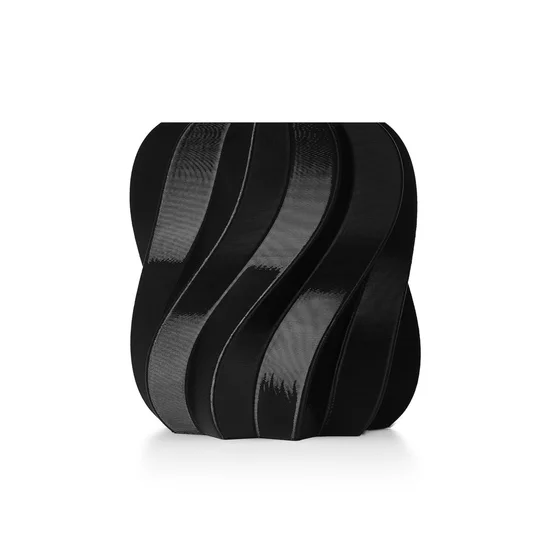
Anycubic PETG
PETG · Standard
Nozzle230–250 °C
150°300°
+23
AliExpress$10,77Реклама · erid: 2SDnjcYYCXD
Filament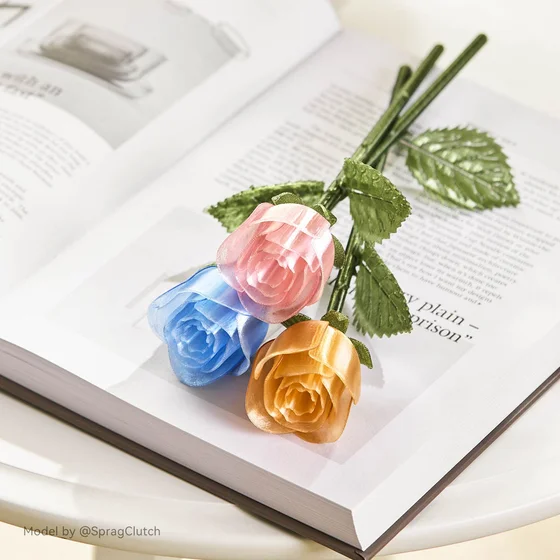
Anycubic PETG Translucent
PETG · Translucent
Nozzle230–250 °C
150°300°
+3
AliExpress$11,54Реклама · erid: 2SDnjca2BoZ
Filament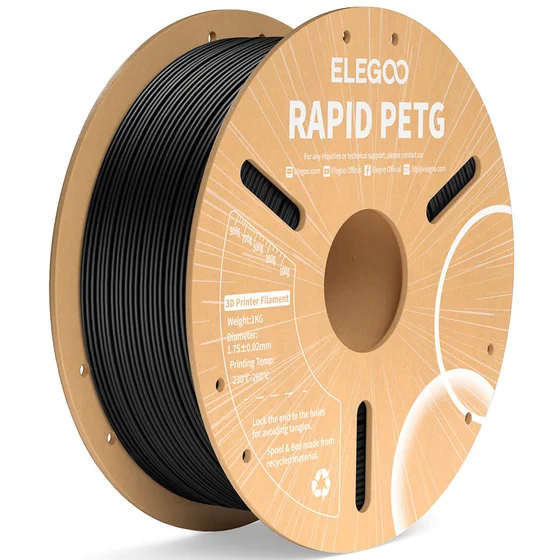
ELEGOO Rapid PETG
PETG · Standard
Nozzle230–260 °C
150°300°
+6
AliExpress$18,52Реклама · erid: 2SDnjesVucn
Filament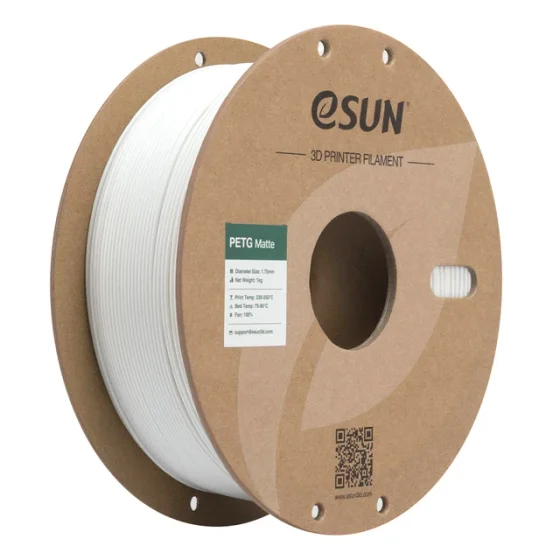
eSUN PETG Matte — Matte, Strong PETG Filament
PETG · Matte
Nozzle230–250 °C
150°300°
+1
AliExpress$14,62Реклама · erid: 2SDnjcYci5Q