Resin
Tough Resin
Impact-resistant functional parts, housings and prototypes that must take a load.
Select printer
Material passport
Density1.1 g/cm³
Encyclopedia
Tough resin is made for parts that must withstand impact, bending, and load rather than just look good. In crack resistance and toughness it clearly beats standard resin, approaching the feel of tough thermoplastics. It is the working choice for functional resin printing.
What it is good for
- Functional parts under load and impact
- Housings, mounts, reusable snaps
- Prototypes tested for strength
- Parts with thin but strong features
Where NOT to use it
- Ultra-fine brittle miniatures — detail is a touch below standard
- High heat — use high-temp resin
- Very flexible items — use flexible resin
- Budget static decor where standard is enough
How to print
- Normal layer exposure: dialed in with a test, often close to standard
- Bottom layer exposure: 25–45 s
- Layer height: 0.03–0.05 mm
- Cure wavelength: 405 nm
- Make supports sturdier: tough resin is more viscous and pulls harder during peel
Washing, curing and storage
- Washing: 4–6 minutes in isopropyl alcohol (IPA)
- UV curing: moderate and even — over-curing lowers toughness
- Storage: dark, tightly sealed bottle
- Stir before printing
Pros and cons
- High toughness and crack resistance
- Suitable for functional loaded parts
- Crumbles less than standard resin
- Machines well
- Detail slightly below standard
- More expensive than standard resin
- Over-curing lowers strength
- Same liquid-resin toxicity
FAQ
It is far more resistant to impact and cracking than brittle standard resin — the part bends or absorbs impact rather than shattering. That makes it usable for functional loaded jobs standard resin cannot do.
Lines
Resin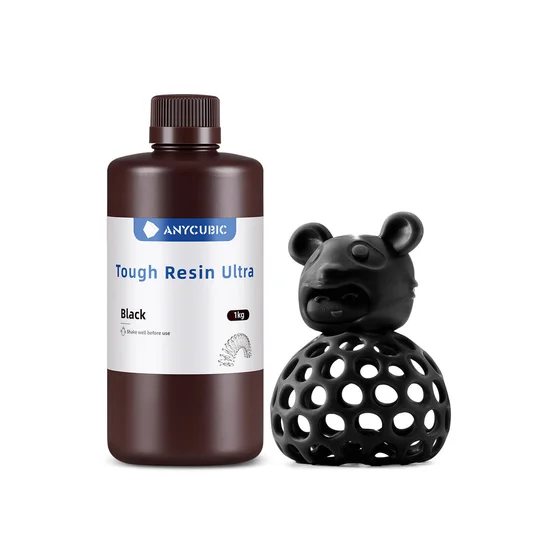
Anycubic Tough Resin Ultra — Impact-Resistant 405nm Resin
Tough Resin · Standard
AliExpress$29,43Реклама · erid: 2SDnjc4TUPd
Resin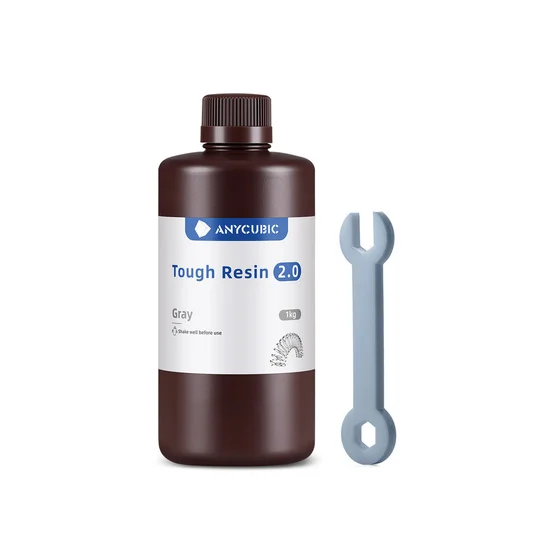
Anycubic Tough Resin — 405nm Impact-Resistant Resin
Tough Resin · Standard
AliExpress$41,72Реклама · erid: 2SDnjd8dv19
Resin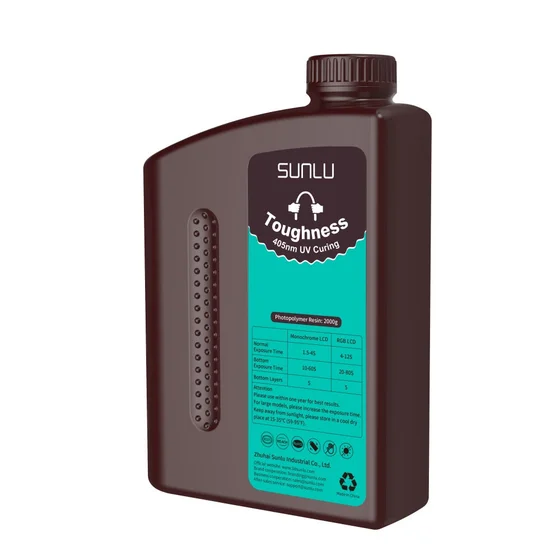
SUNLU High Toughness Resin — 405nm Impact-Resistant Resin
Tough Resin · Standard
AliExpress$22,42Реклама · erid: 2SDnjdDUXdt
Resin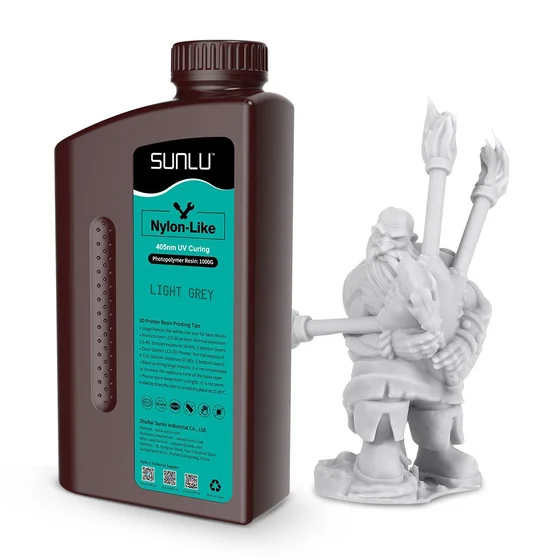
SUNLU Nylon-Like Resin — Tough 405nm Resin for LCD/MSLA
Tough Resin · Standard
AliExpress$22,44Реклама · erid: 2SDnjeGG2C2