Filament
ABS
Strong functional parts, heat-resistant enclosures, items finished with acetone smoothing.
Select printer
Material passport
Nozzle230–250 °C
150°300°
Bed90–110 °C
0°120°
Density1.04 g/cm³
Requirements & properties
Enclosure All-metal
Encyclopedia
ABS (acrylonitrile butadiene styrene) is the plastic of LEGO bricks and appliance casings. Strong, impact-resistant, heat-resistant (~95–100 °C), but finicky to print: it warps heavily and gives off an unpleasant smell. In return, it can be acetone-smoothed to a gloss and machined.
What it is good for
- Functional parts under load and heat
- Electronics housings, under-hood automotive parts
- Items smoothed with acetone to a gloss
- Parts that need drilling, tapping, or gluing
Where NOT to use it
- Large flat parts without an enclosure — they will lift and warp
- Unventilated rooms — ABS emits VOCs (styrene)
- Outdoor parts in direct sun — yellows and weakens from UV (use ASA)
- When you have no enclosed printer or stable temperature
How to print
- Nozzle temperature: 230–250 °C
- Bed temperature: 90–110 °C
- Cooling: 0–20% — strong cooling = cracks and delamination
- Enclosure REQUIRED: chamber 40–50 °C, no drafts
- Adhesion: glue stick or ABS juice, wide brim
- Speed: 40–60 mm/s
Drying and storage
ABS is moderately hygroscopic. Wet ABS bubbles, hisses, and prints rough.
- Drying: 60–70 °C for 4–6 hours
- Storage: dry box with silica gel
- Signs of moisture: bubbling and hissing while printing, weakened layers
Pros and cons
- Strong and impact-resistant
- Heat-resistant (~95–100 °C)
- Acetone-smoothable, easy to machine
- Cheap
- Warps heavily — needs an enclosure
- Sharp toxic smell while printing
- Yellows in sunlight from UV
- Fussy about drafts and temperature swings
FAQ
Yes, mandatory. Without a chamber ABS warps, cracks between layers, and lifts off the bed. An enclosure holds a steady ~40–50 °C and blocks drafts. You also need room ventilation for the fumes.
Lines
Filament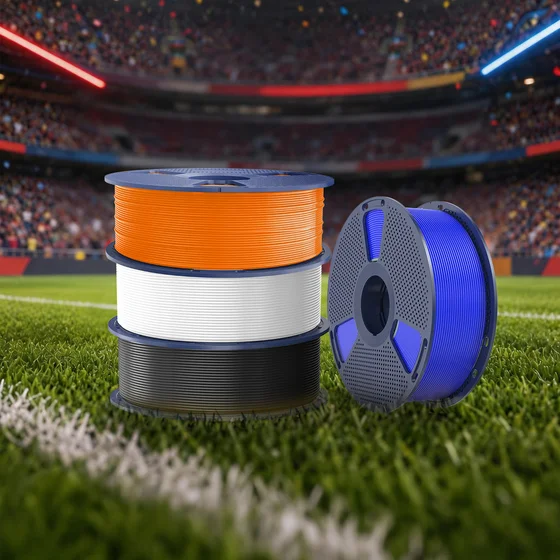
SUNLU ABS
ABS · Standard
Nozzle250–260 °C
150°300°
AliExpress$24,41Реклама · erid: 2SDnjdGSWCa
Filament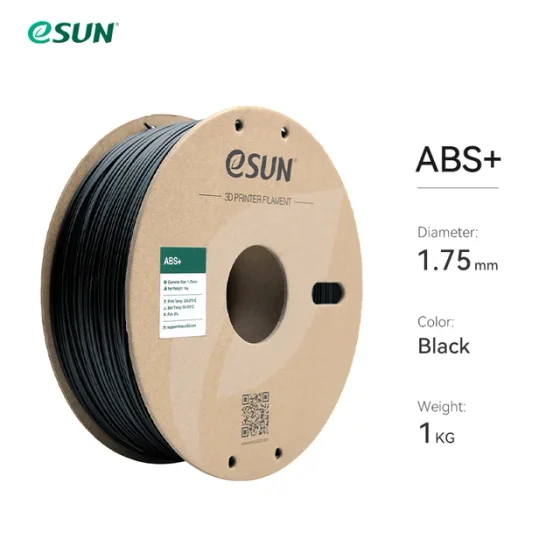
eSUN ABS+ — Enhanced ABS Filament
ABS · Standard
Nozzle220–260 °C
150°300°
+2
AliExpress$11,43Реклама · erid: 2SDnjbrb3U6