Filament
ASA
Outdoor and automotive parts, sun- and weather-resistant. "Outdoor ABS".
Select printer
Material passport
Nozzle240–260 °C
150°300°
Bed90–110 °C
0°120°
Density1.07 g/cm³
Requirements & properties
Enclosure All-metal
Encyclopedia
ASA (acrylonitrile styrene acrylate) is "outdoor ABS". It matches ABS in strength and heat resistance, but the key difference is that it does not yellow or break down in sunlight. That is why ASA is chosen for anything that lives outside: camera mounts, housings, automotive parts.
What it is good for
- Outdoor items: mounts, housings, signage
- Automotive parts in the cabin and under the hood
- Camera and sensor housings, garden automation
- Anything that must survive sun, rain and temperature swings
Where NOT to use it
- Printing without an enclosure — it warps like ABS
- Unventilated rooms — it emits VOCs
- Transparent items — ASA is opaque
- Simple decorative models where you do not need UV resistance (use PLA/PETG)
How to print
- Nozzle temperature: 240–260 °C
- Bed temperature: 90–110 °C
- Cooling: 0–20%, like ABS
- Enclosure REQUIRED: chamber 40–55 °C
- Adhesion: glue stick, wide brim
- Speed: 40–60 mm/s
Drying and storage
ASA is moderately hygroscopic. Moisture causes bubbling and a rough surface.
- Drying: 60–70 °C for 4–6 hours
- Storage: dry box with silica gel
- Signs of moisture: bubbling, hissing, dull rough surface
Pros and cons
- UV-resistant — no yellowing or breakdown in sun
- Strong and heat-resistant, like ABS
- Water- and weather-resistant
- Acetone-smoothable
- Warps, needs an enclosure
- Fumes while printing, needs ventilation
- More expensive than ABS
- Opaque
FAQ
The key difference is UV resistance. ASA does not yellow or weaken in sun, making it the best choice for outdoors. Printing is nearly identical: both need an enclosure and both produce fumes.
Lines
Filament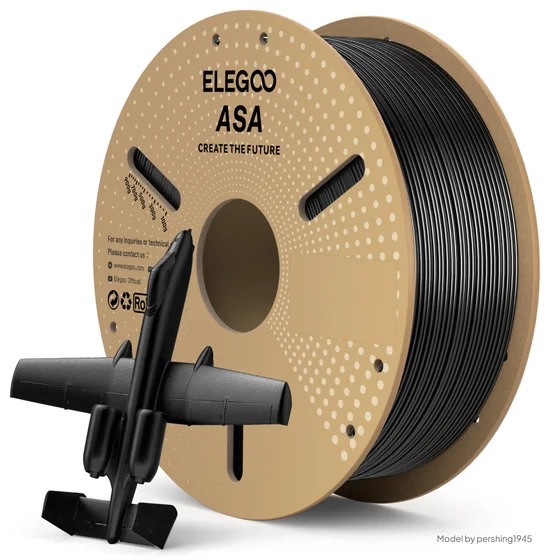
ELEGOO ASA — UV & Weather Resistant Filament
ASA · Standard
Nozzle240–260 °C
150°300°
AliExpress$22,17Реклама · erid: 2SDnjdx81zS
Filament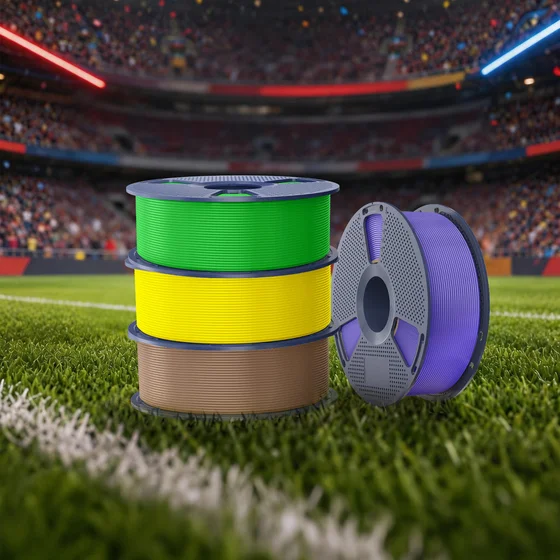
SUNLU ASA — Filament for Outdoor Parts
ASA · Standard
Nozzle250–280 °C
150°300°
AliExpress$12,08Реклама · erid: 2SDnjdaEMai
Filament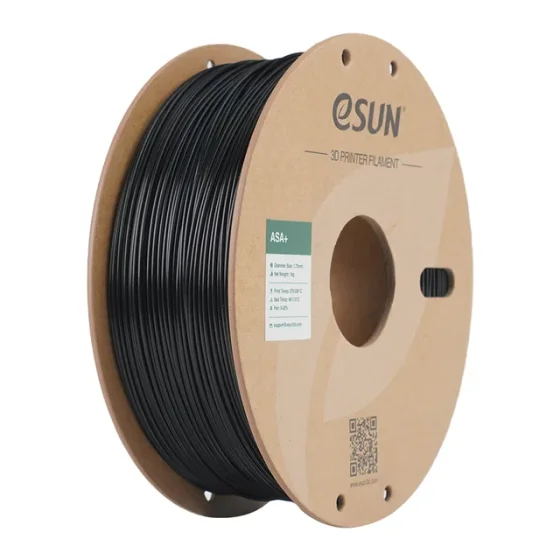
eSUN ASA+ — Weather-Resistant Outdoor Filament
ASA · Standard
Nozzle235–260 °C
150°300°
AliExpress$17,04Реклама · erid: 2SDnjbxWzbU