Resin
ABS-Like Resin
Strong functional parts and prototypes where standard resin is too brittle.
Select printer
Material passport
Density1.1 g/cm³
Encyclopedia
ABS-like resin combines resin-printing detail with higher strength and toughness reminiscent of ABS plastic. The part crumbles less and handles impact and bending better, making it suitable for functional jobs that brittle standard resin cannot do.
What it is good for
- Functional prototypes that get test-fit and loaded
- Parts with threads, snaps, thin but strong features
- Housings and holders needing both accuracy and strength
- Master models that get machined
Where NOT to use it
- Parts under high heat — heat resistance is moderate (use high-temp resin)
- Flexible items — ABS-like is rigid (use flexible resin)
- Outdoor items under constant UV
- When cheap standard resin is enough for static decor
How to print
- Normal layer exposure: close to standard resin, dialed in with a test
- Bottom layer exposure: 25–45 s
- Layer height: 0.03–0.05 mm
- Cure wavelength: 405 nm
- ABS-like is often more sensitive to over-exposure — an under-exposure test helps find the balance
Washing, curing and storage
- Washing: 3–6 minutes in isopropyl alcohol (IPA)
- UV curing: moderate — ABS-like over-cures easily and turns brittle. Shorter but more even is better
- Storage: in a dark, tightly sealed bottle
- Stir before printing
Pros and cons
- Stronger and tougher than standard resin
- Keeps good detail
- Suitable for functional parts
- Can be machined
- More expensive than standard resin
- Over-cures into brittleness easily
- Moderate heat resistance
- Same liquid-resin toxicity
FAQ
Not literally. "ABS-like" means the part is stronger and tougher than standard resin and feels closer to ABS. But it is still resin: heat resistance and longevity are below real ABS filament. In return, detail is higher than FDM.
Lines
Resin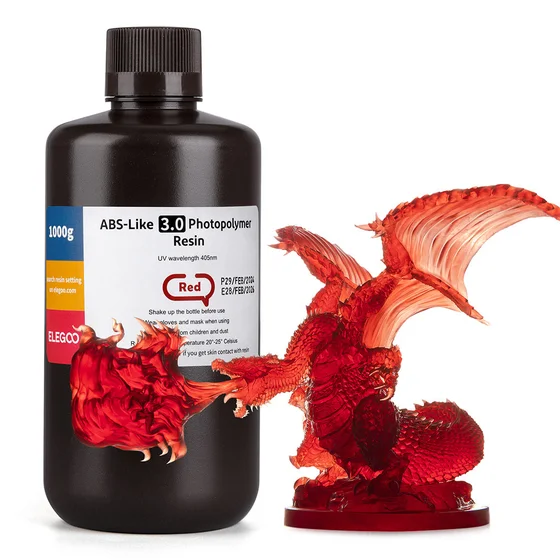
ELEGOO ABS-Like Resin — Tough 405nm ABS-Like Resin
ABS-Like Resin · Standard
+17
AliExpress$30,22Реклама · erid: 2SDnjdG6MP8
Resin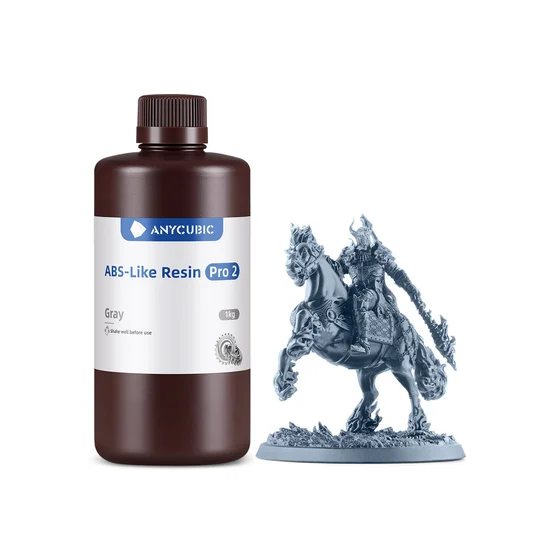
Anycubic ABS-Like Resin Pro — Tough ABS-Like 405nm Resin
ABS-Like Resin · Standard
+6
AliExpress$28,26Реклама · erid: 2SDnjd1DybR
Resin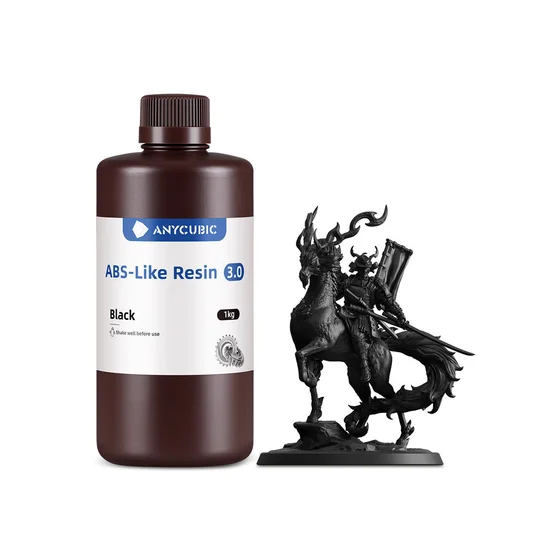
Anycubic ABS-Like Resin — Tough ABS-Style 405nm Resin
ABS-Like Resin · Standard
+5
AliExpress$15,17Реклама · erid: 2SDnjewu31d
Resin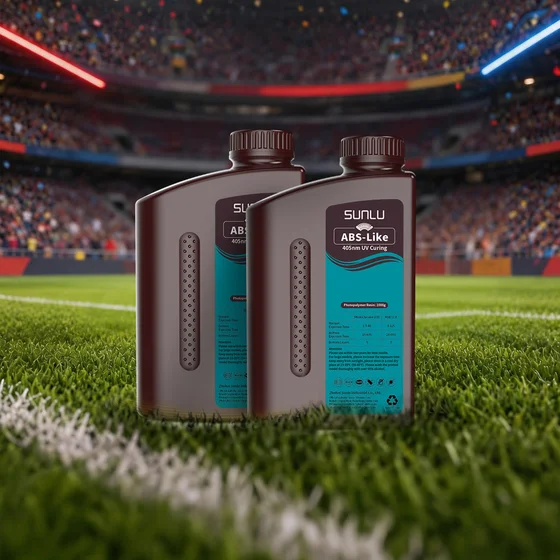
SUNLU ABS-Like Resin — Tough 405nm Resin for LCD/MSLA
ABS-Like Resin · Standard
+3
AliExpress$24,55Реклама · erid: 2SDnjdXGP22
Resin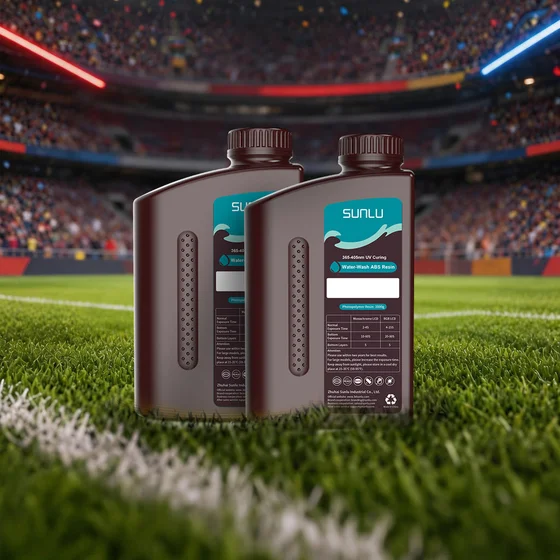
SUNLU Water-Wash ABS-Like — Tough Water-Washable Resin
ABS-Like Resin · Standard
AliExpress$22,44Реклама · erid: 2SDnjeGG2C2
Resin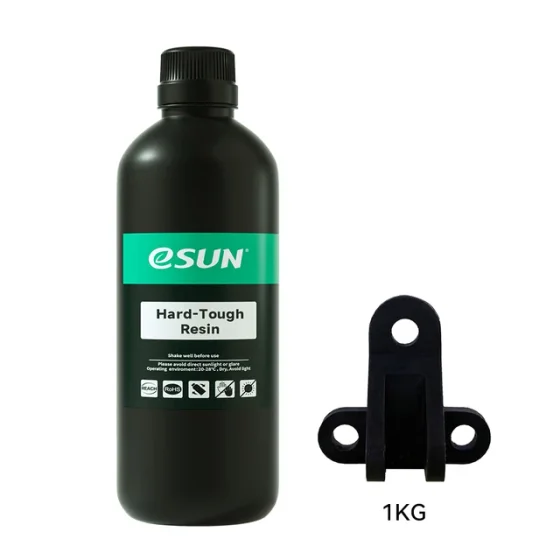
eSUN ABS-Like (Hard-Tough) Resin
ABS-Like Resin · Standard
AliExpress$36,73Реклама · erid: 2SDnjdPYJNn